What Can Collapse
Establishing systematic rules for safely collapsing folder tracks, reducing vertical clutter, and safeguarding mixing bandwidth during demanding post and music sessions.
Criteria for Safely Folding Audio Tracks
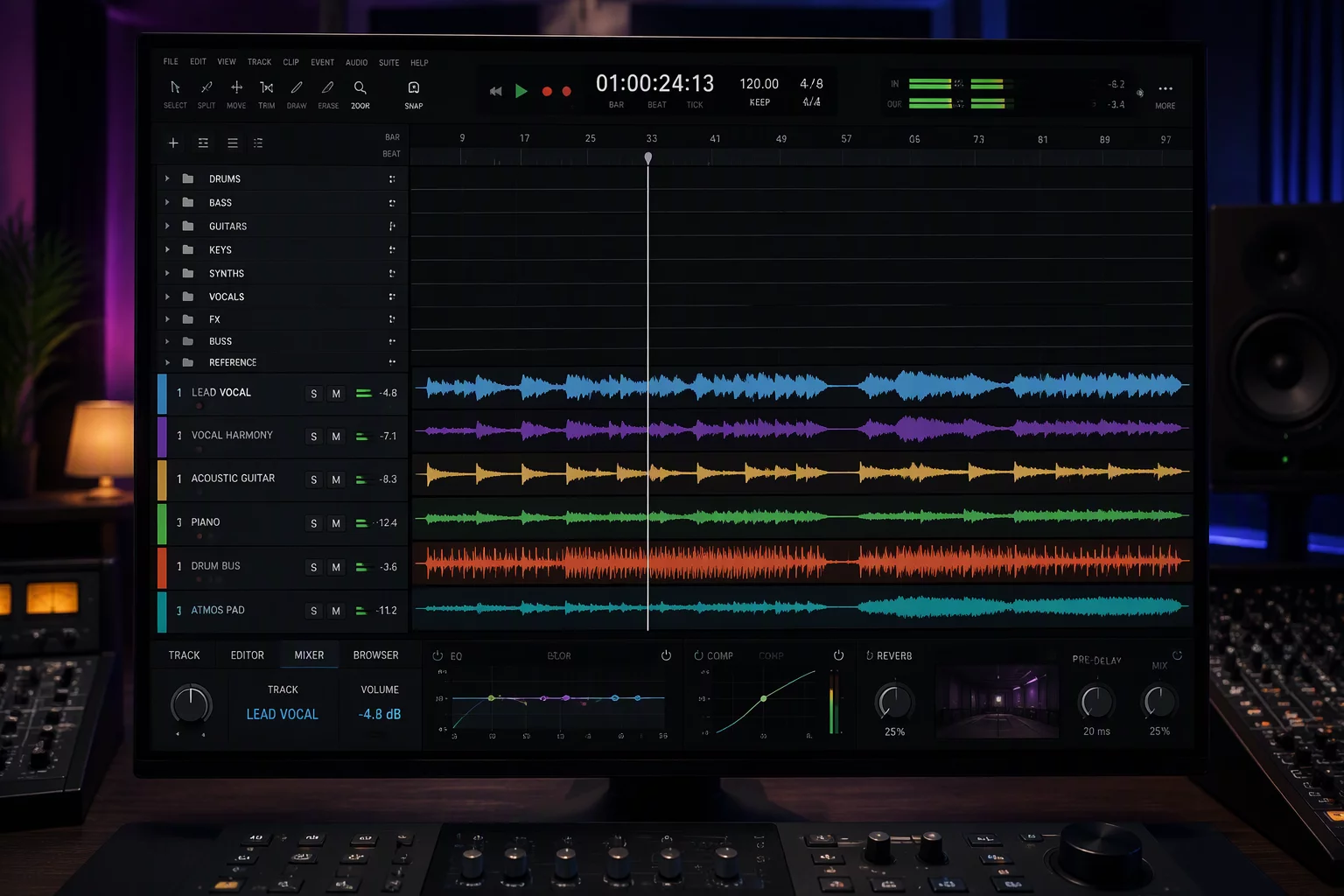
When working across dense multitrack projects containing upwards of one hundred stems, vertical display constraints quickly become a cognitive hazard. Deciding what can collapse requires an understanding of sonic dependency and stage immediacy. Auxiliary reverbs, print tracks, secondary Foley layers, and tuned backing vocal stacks rarely require continuous sample-level inspection once initial editing phases conclude. Grouping these elements into dedicated Pro Tools folder tracks allows engineers to reclaim immediate visual real estate while preserving submix routing integrity.
Collapsing tracks without an intentional focus architecture can disorient the mixing workflow. If an engineer hides channels that still require frequent gain rides, automation sweeps, or timing adjustments, the constant toggling of folders introduces operational friction. Effective session mapping designates background layers—such as doubled rhythm guitars, ambient post-production beds, and drum room mic arrays—as prime candidates for collapse. Meanwhile, keeping reference guides and dynamic targets accessible via a track pin ensures that essential comparative cues remain permanently visible at the top margin of the edit window.
Applying these boundaries helps audio engineers organize large session structures with clarity rather than claustrophobia. A collapsed folder track should represent an audited, reliable audio sub-block: its timing is checked, phase alignment verified, and baseline processing applied. When you treat folder collapse not as a dustbin for clutter, but as an intentional promotion of high-priority audio elements, your attention stays anchored on the musical narrative and structural balancing that dictate project success.
Core Structural Rules for Collapsing Session Elements
Prioritize folding layers based on production phase, automation finality, and monitoring interdependencies. The following criteria identify session segments primed for collapse:
Finalized Rhythm Stems & Room Mics
Acoustic drum close mics, multiple snare top and bottom feeds, and ambient room pairs can be collapsed once gating, phase alignment, and transient shaping are approved.
Secondary BGVs & Tuning Doublers
Large clusters of harmony layers, pitch-corrected vocal doubles, and stereo spreads should sit folded once balance with the lead vocal is established.
Static Sound Design & Foley Beds
Post-production ambient room tone, complex Foley footsteps, and texture tracks that have completed spotting passes fold cleanly into stem buses.
Master Routing & FX Return Stacks
Parallel compression auxes, static reverbs, chorus sends, and saturation inserts do not require constant timeline tracking once send levels are calibrated.
Pre-Collapse Verification Protocol
Phase and Timing Confirmation
Ensure all multi-mic relationships within the target folder have been checked for destructive comb filtering before tucking individual tracks away.
Clip Gain and Edit Boundary Lockdown
Verify crossfades, breath attenuations, and noise floor cleanups are rendered or validated so reopened editing is not triggered during mixdown.
Essential Target Route Anchoring
Confirm auxiliary routing, VCA assignments, and sidechain keys so internal folding does not obscure active signal paths.
Pinning the Active Anchor
Verify the lead dialogue or vocal guide is locked via track pin so critical context remains present even when surrounding folders are folded.
Request Focus Architecture Analysis
Submit your session profile to receive personalized advice on configuring routing folders, isolating background clutter, and streamlining timeline navigation.
Engineer Inquiries & Discussions
0 CommentsShare Session Insight
Related Focus Maps
No comments yet. Be the first to leave a comment.